
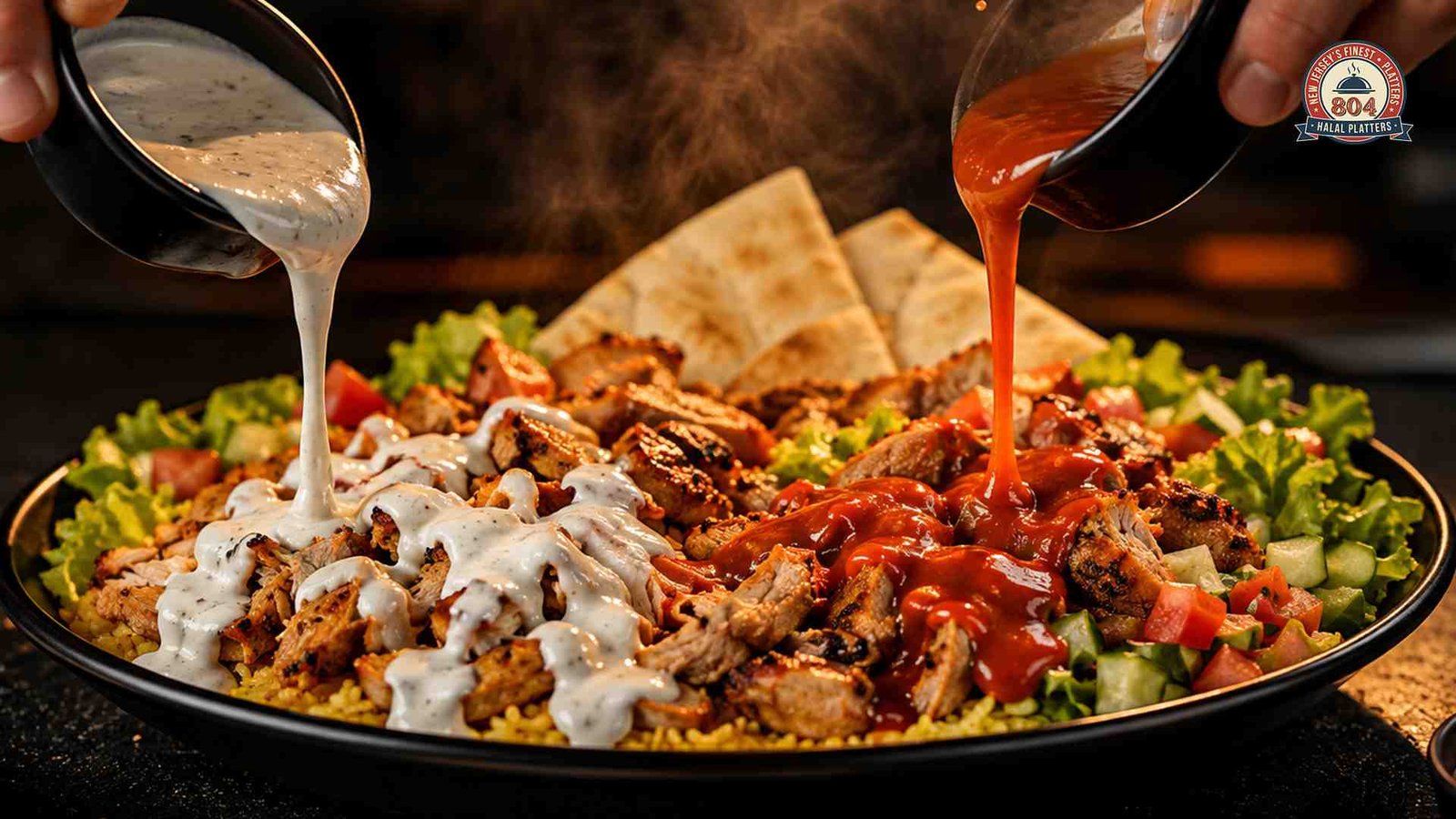
A halal platter can be completely different when served with sauces of different types and flavours. The two main types that people like are creamy white sauce and hot spicy sauce. Although the final decision is still based on personal preferences, there can be a number of differences between white sauce and hot sauce that will explain the winner through taste consistency, temperature, and the way in which each sauce interacts with seasoned meat and rice.
A halal restaurant in New Jersey brings an opportunity for a familiar halal platter to be turned into a personal one through various sauces. Getting to know and learning the role of each type of sauce will allow one to come up with various combinations that match one’s tastes.
What White Sauce Brings to the Plate
White sauce often enriches the dish by giving it a milky and buttery flavor. The consistency of the white sauce may be so smooth that it can dilute the strength of proteins that are heavily seasoned, but in reality, it can also moisten rice and other elements of the dish.
In turn, white sauce and hot sauce can be perceived as different things. White sauce usually brings out the subdued, creamy contrast, whereas hot sauce is aimed at giving you sharper heat and fire.
Why Hot Sauce Feels More Intense
Essentially, hot sauce is the spiciness coming from chilli peppers or chilli derivatives that are the main components.
That means when hot and white sauces are spread on a plate, these two sauces differ in taste. It can be that white sauce gives a bit of depth and richness, whereas hot sauce gives the taste of pepperiness, which may cause the seasoned meats to taste much more clearly.
Why Combining Both Works
Instead of making a choice between the two, a lot of people love eating the dishes with both. The smoothness of white sauce can soften the strong heat of hot sauce, making the overall taste even richer and better.
Putting white sauce and hot sauce together on a platter with seasoned chicken, lamb, rice, vegetables, and sauces not only brings out more flavors in one bite but also doesn’t require adding anything extra to it.
How Sauces Interact With Different Proteins
The taste of the main ingredient might influence which combination of sauce you like most. Lightly seasoned chicken will be matched perfectly with an intensely spicy sauce, but a more intense lamb dish can benefit from a velvety complement.
At 804 Halal Platters, you can order Chicken Platters, Lamb Platters, Hot Chicken Platters, Falafel Platters, and also combination meals. With the white sauce and hot sauce, you can try different tastes of the same dishes.
Sauce Can Change the Texture Too
Sauces not only determine flavour, but they also impact the textures and textures of foods. A velvety sauce can provide a moist and smooth touch, whereas a hot sauce typically has a lower viscosity and is able to spread rapidly over grains and proteins.
This contrast in textures becomes mainly evident when one experiences zabiha halal platters in which rice, protein, vegetables, and sauces are combined in a food serving.
Finding Your Preferred Balance
Sauce ratio does not have a universal measure because taste preference is very individual. Some people like hot sauce only in small amounts, whereas others, beyond hot sauce, also want quite a lot of white sauce. On the other end are those who desire a strong, spicy flavor.
Visiting halal restaurants in New Jersey, you can try out different levels of heat and creaminess with combinations of both sauces based on your preference.
To get a gentler result, use more white sauce at the beginning and then add hot sauce slowly. To get hotter flavors, raise the heat while having white sauce help you to temper the heat.
Sauces Can Make a Budget Meal More Interesting
When you want to order halal food on a budget, small flavour adjustments can make a familiar meal feel different without requiring an entirely different order.
Changing the balance of white sauce and hot sauce can give the same platter a noticeably different flavour experience, making sauces a simple way to customise your meal.
Sauces for Catering and Group Orders
Sauce preferences get really serious when you’re ordering food for a mixed group. Since everyone has different spice levels that they’re comfortable with, a great way to offer variety to guests is the option to provide different kinds of sauces separately.
At halal catering services in Piscataway, the availability of different types of sauce with each platter is really an added advantage. It helps a lot when large groups of guests or even a small family get the same platter and the ability to choose which sauces are good for their own taste preferences.
Why Sauce Choice Matters With Halal Platters
A well-prepared platter already has layers of flavour from seasoned proteins, rice, vegetables, and sides. Sauces should complement those flavours rather than completely overpower them.
This is why white sauce and hot sauce can be viewed as finishing elements. One adds creaminess and richness, while the other introduces heat and intensity.
How to Choose Between White and Hot Sauce
Consider these simple questions before adding your sauce:
- Do you prefer creamy or spicy flavours?
- How much heat can you comfortably handle?
- Are you eating a mild or strongly seasoned protein?
- Do you want to enhance the existing flavours or create a stronger contrast?
If you’re ordering zabiha halal platters, trying both sauces separately can also help you identify which combination works best for your palate.
A Simple Experiment for Your Next Platter
The easiest way to understand the difference is to try a small amount of each sauce with the same bite of chicken, rice, or vegetables. Taste the food with white sauce first, then try it with hot sauce.
Finally, combine the two and notice how the creamy and spicy elements interact. This simple comparison demonstrates why white sauce and hot sauce can create noticeably different dining experiences from the same platter.
A Flexible Choice for Different Preferences
A good halal restaurant in New Jersey can appeal to different diners by offering meals that can be customised. Someone who prefers mild flavours can use more white sauce, while a spice lover can add additional hot sauce.
For group orders, this flexibility is especially useful. Halal catering services in Piscataway can benefit from offering sauces separately so guests can customise their portions without changing the main menu.
Conclusion
The debate between white sauce and hot sauce ultimately comes down to personal taste, but there is a simple explanation for why they create such different experiences. White sauce contributes creaminess and richness, while hot sauce brings heat and intensity. Using both can create a balanced combination that complements seasoned proteins, rice, and vegetables.
Whether you’re visiting a halal restaurant in New Jersey, ordering zabiha halal platters, or arranging halal catering services in Piscataway, 804 Halal Platters gives you the opportunity to customise your meal and enjoy the sauce combination that best matches your taste. Ready to create your perfect halal platter with flavours you love? Contact us today to explore the menu, place an order, or discuss your next catering event.